

There’s something particularly intriguing I would like to highlight regarding a certain image that has presumably crossed your path before. This image in question features hieroglyphics that depict the practice of circumcision among the Ancient Egyptians. While I have yet to identify the source of this image to confirm its authenticity, that detail seems secondary for our current discussion.
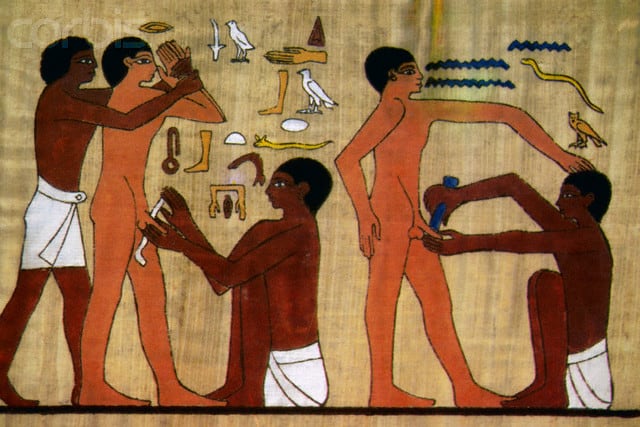
The crucial point I aim to articulate revolves around the ongoing discourse about Ancient Egypt and its connection to melanated Africans, often referred to as Black people. It’s a common scenario where, during discussions surrounding Ancient Egyptian history, this particular image gets referenced by individuals attempting to undermine or dismiss the notion of Ancient Egyptians being part of the melanated African heritage. In a rather derogatory manner, they employ terms like “dick-washers” to delegitimize the roles these figures play within that remarkable civilization.
What genuinely amused me is the paradox these individuals portray. They scrutinize the image, observe brown-skinned (melanated) figures in the hieroglyphics, and yet, they conclude that those individuals assumed to be “washing” in the image are Black. But, when presented with additional illustrations showcasing people who possess the same skin complexion as the so-called “dick-washers,” there’s an immediate refusal to accept that they are indeed Black. This inconsistency raises significant questions about their reasoning.
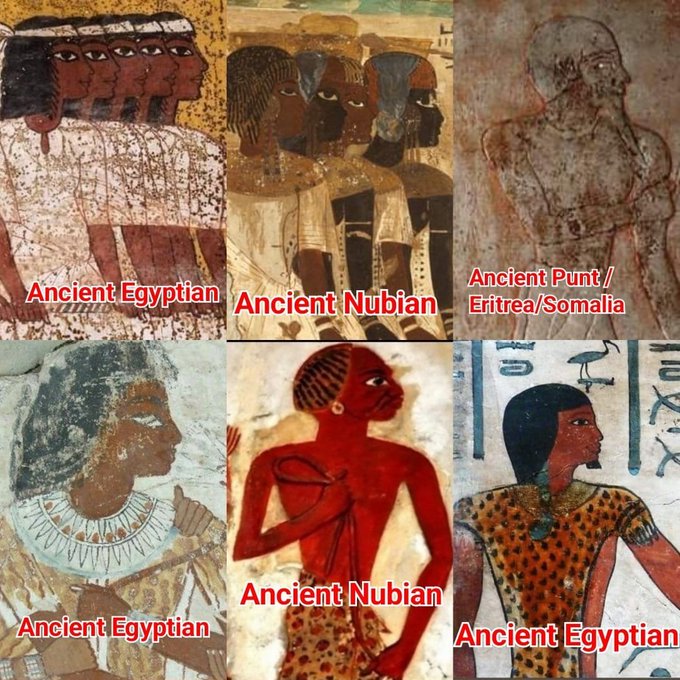

The references and images are abundant; there are thousands of hieroglyphics scattered throughout ancient Egypt that depict individuals with that distinct brown complexion. These visual representations serve as tangible evidence of the diverse demographic in Ancient Egypt, which was predominantly comprised of melanated individuals.
To distill this further, it appears these critics have inadvertently communicated their biases and misunderstandings about the ethnic identities historically associated with Ancient Egypt. In summary, ancient Egyptian civilization was fundamentally established and governed by peoples of African descent who would undeniably align with what we classify as “Black” in today’s terms. This realization is essential in acknowledging and preserving the rich, complex history of Ancient Egypt and its true connection to the broader African narrative.
I would also like to add that the image in question, often referenced to “disprove” the connection between Ancient Egyptians and melanated Africans, isn’t even an original piece of art. The original carving, which dates back to an ancient Egyptian artifact, actually showcased everyone with the same dark-brown complexion, with another having no color. The vivid hues we see today were added later, along with several alterations that have contributed to a distorted interpretation of the scene.


In the edited version, the individuals depicted performing the circumcision are represented with darker skin tones than those of the men being circumcised. This deliberate choice raises numerous questions about the motivations behind such modifications. Why would the editors choose to enhance the skin tone of the figures involved in this act, especially if the original artwork carried no such coloration?
The manipulation of this imagery potentially reaffirms a narrative that seeks to diminish the African identity of Ancient Egyptians. By altering the skin tones, it not only distorts the original meaning but also perpetuates a skewed perspective on what Ancient Egyptian society looked like. This practice of selectively editing historical artifacts can mislead contemporary interpretations and discussions; it provides a flawed basis for arguments that deny the deep-seated connections between Ancient Egyptians and the broader African heritage.
Such actions reveal an inherent bias and a deliberate disassociation from the rich historical narrative that binds Ancient Egypt to its African roots. As we engage in the discourse surrounding ancient civilizations and their identities, it is crucial to approach these images with a critical eye, aware of the potential for misrepresentation and misunderstanding. This awareness enables a more honest acknowledgment of the complexities involved in the cultural and ethnic identity of Ancient Egyptians, safeguarding the integrity of their historical legacy.
Disclosure: This post contains affiliate links. If you buy through them, I may earn a small commission—at no extra cost to you. Thanks for supporting the site!

Africa Is Not a Country: Notes on a Bright Continent
$17.99 (as of January 26, 2026 03:51 GMT +00:00 - More infoProduct prices and availability are accurate as of the date/time indicated and are subject to change. Any price and availability information displayed on [relevant Amazon Site(s), as applicable] at the time of purchase will apply to the purchase of this product.)
Ethiopian Bible in English Complete | LARGE PRINT: The African Scriptures with the Full and Missing Deuterocanonical Apocrypha, Book of Enoch, ... Judith, Bel and the Dragon and Much More
$19.99 (as of January 26, 2026 03:51 GMT +00:00 - More infoProduct prices and availability are accurate as of the date/time indicated and are subject to change. Any price and availability information displayed on [relevant Amazon Site(s), as applicable] at the time of purchase will apply to the purchase of this product.)
River of the Gods: Genius, Courage, and Betrayal in the Search for the Source of the Nile
$17.72 (as of January 26, 2026 03:51 GMT +00:00 - More infoProduct prices and availability are accurate as of the date/time indicated and are subject to change. Any price and availability information displayed on [relevant Amazon Site(s), as applicable] at the time of purchase will apply to the purchase of this product.)
The Boer War
$9.30 (as of January 26, 2026 03:51 GMT +00:00 - More infoProduct prices and availability are accurate as of the date/time indicated and are subject to change. Any price and availability information displayed on [relevant Amazon Site(s), as applicable] at the time of purchase will apply to the purchase of this product.)
ETHIOPIAN BIBLE in English LARGE PRINT: The Definitive Collection of all the Rejected Apocrypha Scriptures. Includes Jubilees, Enoch, Audio, Bel and the Dragon, I-II-III Meqabyan, and much More
$17.99 (as of January 26, 2026 03:51 GMT +00:00 - More infoProduct prices and availability are accurate as of the date/time indicated and are subject to change. Any price and availability information displayed on [relevant Amazon Site(s), as applicable] at the time of purchase will apply to the purchase of this product.)
The Ultimate Ethiopian Bible in English with All Apocrypha and 1, 2, and 3 Enoch: Thousands of Books in One, Plus Audio, Videos, and More
$34.97 (as of January 26, 2026 03:51 GMT +00:00 - More infoProduct prices and availability are accurate as of the date/time indicated and are subject to change. Any price and availability information displayed on [relevant Amazon Site(s), as applicable] at the time of purchase will apply to the purchase of this product.)
Ethiopian Bible in English Complete 88 Books (Illustrated): With Ethiopian Illustrations. Includes the Entire Apocryphal Collection
$24.99 (as of January 26, 2026 03:51 GMT +00:00 - More infoProduct prices and availability are accurate as of the date/time indicated and are subject to change. Any price and availability information displayed on [relevant Amazon Site(s), as applicable] at the time of purchase will apply to the purchase of this product.)
A Long Way Gone: Memoirs of a Boy Soldier
$2.99 (as of January 26, 2026 03:51 GMT +00:00 - More infoProduct prices and availability are accurate as of the date/time indicated and are subject to change. Any price and availability information displayed on [relevant Amazon Site(s), as applicable] at the time of purchase will apply to the purchase of this product.)
The Second Emancipation: Nkruman, Pan-Africanism, and Global Blackness at High Tide
$29.49 (as of January 26, 2026 03:51 GMT +00:00 - More infoProduct prices and availability are accurate as of the date/time indicated and are subject to change. Any price and availability information displayed on [relevant Amazon Site(s), as applicable] at the time of purchase will apply to the purchase of this product.)