

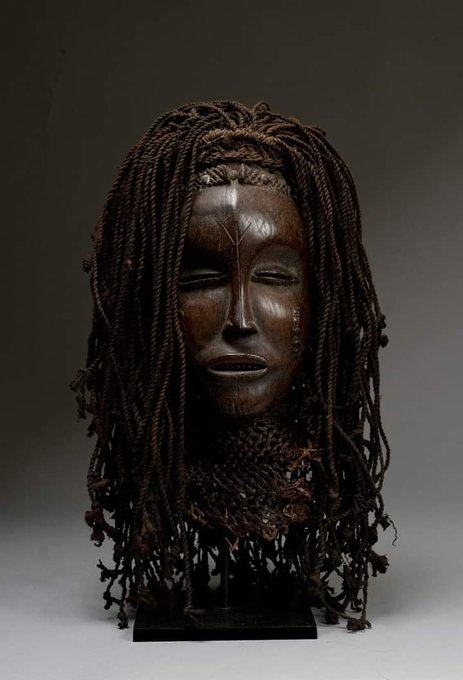
The Mwana Pwo masks of the Chokwe people in Angola hold deep cultural significance, intricately woven into their initiation ceremonies known as mukanda. These striking masks, exclusively worn by men, represent female ancestors, embodying the admired features of young women. Adorned with a tightly knit body suit, including false breasts and a fringe over the hips, the masks are integral to the ceremonial dance, mirroring the graceful gestures of women and bestowing fertility upon the male spectators.
As a tribute to the founding female ancestors, the Mwana Pwo masks are especially meaningful as the Chokwe tradition traces descent through the maternal line. This joint performance with the male counterpart, Cihongo, symbolizes fertility and prosperity within the community, resonating with the cultural ideals that have transcended from the precolonial era to inspire contemporary artists.
The intricate motifs inscribed on the masks’ forehead and cheeks are not simply decorative, but rich with cultural symbolism. The designs, considered classic graphic representations of beauty and ethnic identity, encompass a central cruciform on the forehead, interpreted as a cosmogram, as well as markings on the cheeks described as a solar disc joined by tears. The masks grace the celebrations marking the culmination of initiation into adulthood, signifying the transition and the bittersweet separation between mothers and their sons, reflective of the pride and sorrow embedded in Chokwe women’s experiences.
In essence, the Mwana Pwo masks encapsulate a profound legacy, intertwining aesthetic beauty with cultural symbolism, and continue to serve as a living testament to the Chokwe people’s heritage and artistic expression.


Disclosure: This post contains affiliate links. If you buy through them, I may earn a small commission—at no extra cost to you. Thanks for supporting the site!

In the Forest of No Joy: The Congo-Océan Railroad and the Tragedy of French Colonialism
$9.99 (as of March 18, 2026 15:24 GMT +00:00 - More infoProduct prices and availability are accurate as of the date/time indicated and are subject to change. Any price and availability information displayed on [relevant Amazon Site(s), as applicable] at the time of purchase will apply to the purchase of this product.)
Why Comrades go to War: Liberation Politics and the Outbreak of Africa's Deadliest Conflict
$19.80 (as of March 18, 2026 15:24 GMT +00:00 - More infoProduct prices and availability are accurate as of the date/time indicated and are subject to change. Any price and availability information displayed on [relevant Amazon Site(s), as applicable] at the time of purchase will apply to the purchase of this product.)
We Wish to Inform You That Tomorrow We Will be Killed With Our Families: Stories from Rwanda
$10.53 (as of March 18, 2026 15:24 GMT +00:00 - More infoProduct prices and availability are accurate as of the date/time indicated and are subject to change. Any price and availability information displayed on [relevant Amazon Site(s), as applicable] at the time of purchase will apply to the purchase of this product.)
How I Found Livingstone in Central Africa
$17.37 (as of March 18, 2026 15:24 GMT +00:00 - More infoProduct prices and availability are accurate as of the date/time indicated and are subject to change. Any price and availability information displayed on [relevant Amazon Site(s), as applicable] at the time of purchase will apply to the purchase of this product.)
Black Hawk Down: A Story of Modern War
$11.99 (as of March 18, 2026 15:24 GMT +00:00 - More infoProduct prices and availability are accurate as of the date/time indicated and are subject to change. Any price and availability information displayed on [relevant Amazon Site(s), as applicable] at the time of purchase will apply to the purchase of this product.)
Lord Leverhulme's Ghosts: Colonial Exploitation in the Congo
$19.95 (as of March 18, 2026 15:24 GMT +00:00 - More infoProduct prices and availability are accurate as of the date/time indicated and are subject to change. Any price and availability information displayed on [relevant Amazon Site(s), as applicable] at the time of purchase will apply to the purchase of this product.)
The Assassination of Lumumba
$18.27 (as of March 18, 2026 15:24 GMT +00:00 - More infoProduct prices and availability are accurate as of the date/time indicated and are subject to change. Any price and availability information displayed on [relevant Amazon Site(s), as applicable] at the time of purchase will apply to the purchase of this product.)
The Zanzibar Chest
$8.00 (as of March 18, 2026 15:24 GMT +00:00 - More infoProduct prices and availability are accurate as of the date/time indicated and are subject to change. Any price and availability information displayed on [relevant Amazon Site(s), as applicable] at the time of purchase will apply to the purchase of this product.)
Machete Season: The Killers in Rwanda Speak
$12.99 (as of March 18, 2026 15:24 GMT +00:00 - More infoProduct prices and availability are accurate as of the date/time indicated and are subject to change. Any price and availability information displayed on [relevant Amazon Site(s), as applicable] at the time of purchase will apply to the purchase of this product.)
5 thoughts on “Mwana Pwo Masks of the Chokwe People: Embodying Cultural Ideals and Symbolism”