

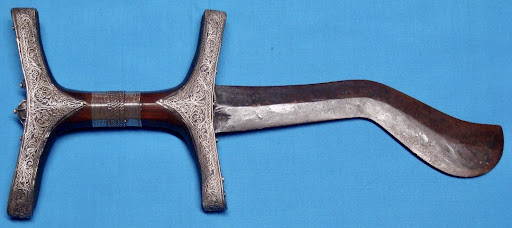
The Beja – Beni Amer or Hadendoa Knife is a fascinating piece of craftsmanship that holds deep historical and cultural significance. This exquisite dagger features a blade made of durable iron and a hilt carved from rich ebony wood, combining functionality with artistic elegance. The Beja people, comprising of five tribes, with the prominent sub-groups being the Hadendoa and Beni Amer, are believed to be descendants of the ancient Egyptians who were forced to leave their homeland by the invading Nubians in the 8th century BC. This dispersal led them to establish communities across Sudan, Eritrea, and northwest Ethiopia, where their unique heritage and traditions continue to thrive.
The double-edged curved steel blade of the Beja knife, along with its tooled embossed leather sheath, exemplifies the meticulous craftsmanship and attention to detail that characterize this cultural artifact. Notably, the stunning X-shaped hilt not only adds to its aesthetic appeal but also serves a functional purpose, designed to safeguard the wielder’s hand from potential harm. Beyond its practical utility, the Beja – Beni Amer or Hadendoa Knife holds significant cultural importance, often serving as a symbol of status within the community.
In addition to its historical and cultural significance, the aesthetic allure of the Beja knife is undeniable. The photographs capture the intricate details and fine craftsmanship of the dagger, showcasing its timeless appeal. This remarkable piece not only embodies the skilled artistry of its creators but also stands as a tangible link to the rich and diverse heritage of the Beja people.

Disclosure: This post contains affiliate links. If you buy through them, I may earn a small commission—at no extra cost to you. Thanks for supporting the site!

The River War: An Account of the Reconquest of the Sudan
$14.95 (as of February 5, 2026 23:26 GMT +00:00 - More infoProduct prices and availability are accurate as of the date/time indicated and are subject to change. Any price and availability information displayed on [relevant Amazon Site(s), as applicable] at the time of purchase will apply to the purchase of this product.)
Skeletons on the Zahara: A True Story of Survival
$4.99 (as of February 5, 2026 23:26 GMT +00:00 - More infoProduct prices and availability are accurate as of the date/time indicated and are subject to change. Any price and availability information displayed on [relevant Amazon Site(s), as applicable] at the time of purchase will apply to the purchase of this product.)
The Great Sea: A Human History of the Mediterranean
$25.84 (as of February 5, 2026 23:26 GMT +00:00 - More infoProduct prices and availability are accurate as of the date/time indicated and are subject to change. Any price and availability information displayed on [relevant Amazon Site(s), as applicable] at the time of purchase will apply to the purchase of this product.)
The Ghosts of Cannae: Hannibal and the Darkest Hour of the Roman Republic
$19.44 (as of February 5, 2026 23:26 GMT +00:00 - More infoProduct prices and availability are accurate as of the date/time indicated and are subject to change. Any price and availability information displayed on [relevant Amazon Site(s), as applicable] at the time of purchase will apply to the purchase of this product.)
The Devil Came on Horseback: Bearing Witness to the Genocide in Darfur
$15.91 (as of February 5, 2026 23:26 GMT +00:00 - More infoProduct prices and availability are accurate as of the date/time indicated and are subject to change. Any price and availability information displayed on [relevant Amazon Site(s), as applicable] at the time of purchase will apply to the purchase of this product.)
The Arabs: A History
$15.99 (as of February 5, 2026 23:26 GMT +00:00 - More infoProduct prices and availability are accurate as of the date/time indicated and are subject to change. Any price and availability information displayed on [relevant Amazon Site(s), as applicable] at the time of purchase will apply to the purchase of this product.)
Stolen Legacy
$0.99 (as of February 5, 2026 23:26 GMT +00:00 - More infoProduct prices and availability are accurate as of the date/time indicated and are subject to change. Any price and availability information displayed on [relevant Amazon Site(s), as applicable] at the time of purchase will apply to the purchase of this product.)
Jews Under Moroccan Skies: Two Thousand Years of Jewish Life
$19.95 (as of February 5, 2026 23:26 GMT +00:00 - More infoProduct prices and availability are accurate as of the date/time indicated and are subject to change. Any price and availability information displayed on [relevant Amazon Site(s), as applicable] at the time of purchase will apply to the purchase of this product.)
The Burning Shores: Inside the Battle for the New Libya
$17.89 (as of February 5, 2026 23:26 GMT +00:00 - More infoProduct prices and availability are accurate as of the date/time indicated and are subject to change. Any price and availability information displayed on [relevant Amazon Site(s), as applicable] at the time of purchase will apply to the purchase of this product.)
4 thoughts on “The Beja – Beni Amer or Hadendoa Knife: A Cultural Symbol of the Beja Tribes”